Futsal Shoes vs Turf Shoes: IC or TF, and How to Choose
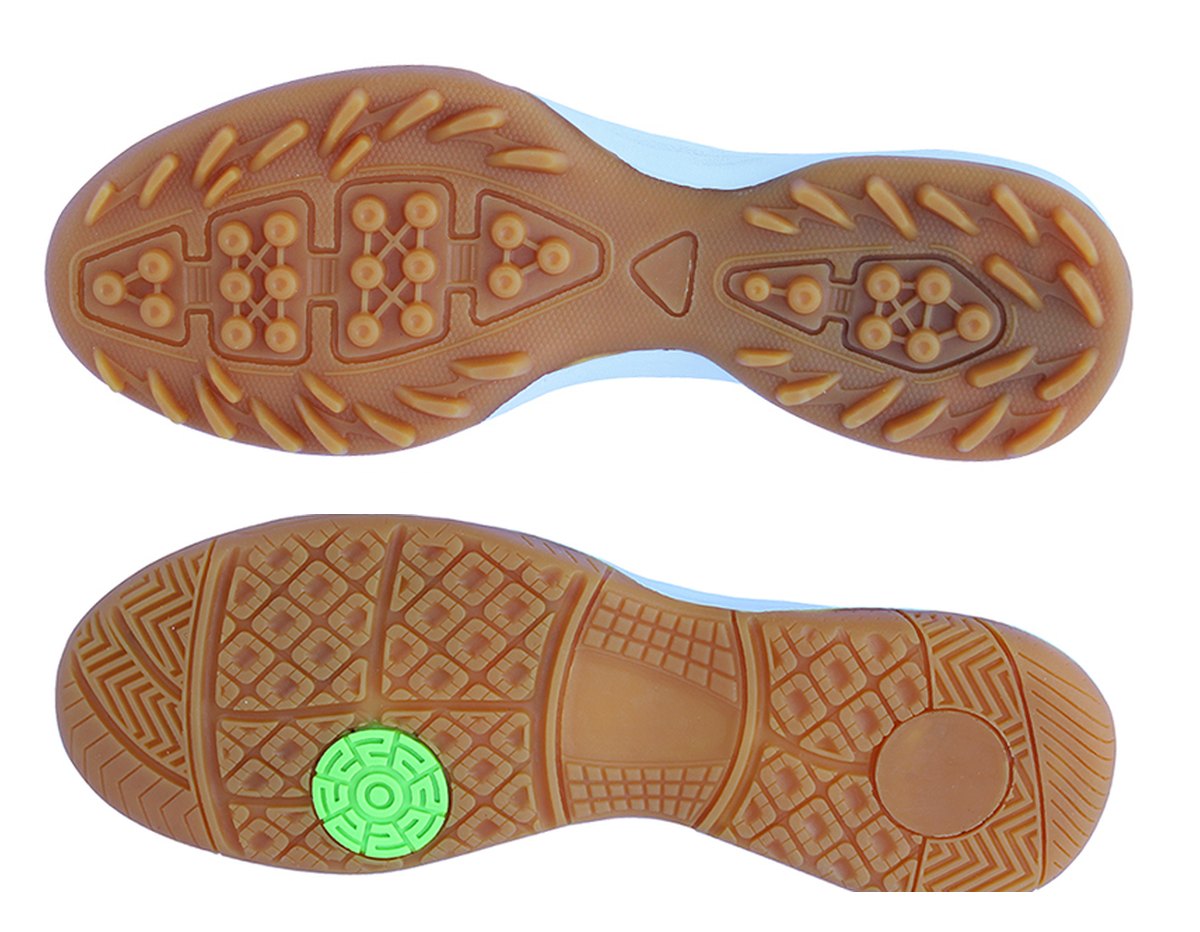
Two shoes can both be sold as "futsal shoes" and still be made for different floors. One has a flat rubber sole for indoor courts. The other has dozens of short rubber studs for artificial turf. On the box they are marked IC and TF, and picking the wrong one is an easy way to end up with a new pair that feels slippery. Here is how the two differ, how to choose, and what to do if your shoes already have the wrong sole.
The short answer
- TF (turf): many short rubber studs across the whole sole. Made for short artificial turf, outdoor futsal pitches and hard, rough ground. Not made for smooth indoor floors or wet natural grass.
- IC or IN (indoor court): a flat rubber sole with a tread pattern and no studs. Made for sports halls, wooden floors and smooth indoor courts. Not made for grass or turf.
- How to choose: look at the floor you play on most, not at the name of the game. If there is grass, even short artificial grass, think TF. If the floor is smooth and hard, think IC.
The photo at the top shows the difference: our turf futsal sole (STUD-06) with many short studs, and below it our flat indoor sole (STUD-07). Both are natural rubber replacement soles from our workshop.
How the two soles work
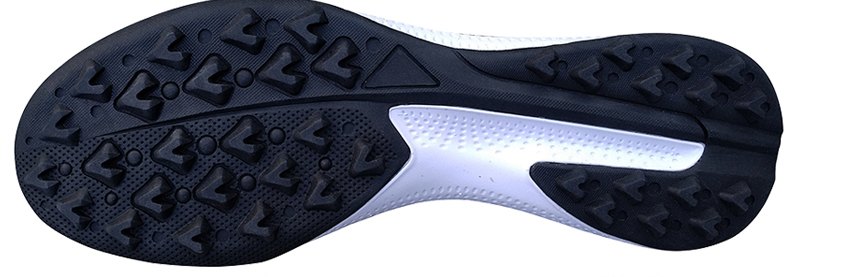
TF: short studs for turf
A turf sole gets its grip by pressing many small rubber studs into the surface at once. On short artificial grass the studs sit between the fibres, so you can stop and turn without the sole sliding across the top. There is no single long stud to dig in, so the load is spread over the whole foot rather than a few points.
That is why TF shoes are a common choice for small-sided games on artificial pitches, outdoor futsal courts with turf, and casual play on hard ground. Their limit is wet natural grass. The studs are too short to bite into soft ground, so on a rainy grass pitch a pair of boots with longer studs will hold better.
Turf soles also vary in comfort. Some are plain rubber, others add a cushioned layer between the rubber and your foot. If you play long sessions on a hard surface, the cushioned kind is worth considering.
IC: flat rubber for indoor courts
An indoor court sole has no studs at all. It is a flat sheet of rubber with a shallow tread, often a pattern of grooves or small blocks. On a smooth floor, grip comes from the whole surface of the rubber touching the ground, a bit like a basketball or badminton shoe.
This is what you want in a sports hall or on a wooden floor. The flat sole keeps the full width of your foot in contact with the floor when you shift your weight, and some indoor venues ask for soles that do not leave marks, so check the rules of the hall you use.
Outdoors the picture changes. On artificial grass a flat sole has nothing to hold the surface with and tends to slide, and rough outdoor ground wears a shallow tread down quickly.
What happens when you wear the wrong one
The signs are easy to miss in the first few sessions, so here is what to look for.
- TF shoes on a smooth indoor floor: only the tips of the studs touch the ground, so there is less rubber in contact with the floor. On sharp turns it can feel like skating or wobbling.
- IC shoes on artificial turf: the flat sole sits on top of the grass fibres instead of between them. You may slip on quick stops, and the tread can wear smooth faster than you expect.
- Either one on wet natural grass: neither sole is made for soft ground. Boots with longer studs are the safer choice there.
If a new pair feels slippery from the first session, check the floor before you blame the shoe. The sole may simply be meant for a different surface.
How to choose for where you play
Start with the place you play most often. Ask three questions:
- Is there grass? Short artificial grass, a rooftop futsal pitch or a cage with turf all point to a TF sole.
- Is the floor smooth and hard? A sports hall, a wooden floor or a polished court points to an IC sole.
- Do you play long sessions on hard ground? Look for a sole with a cushioned layer, whichever type you choose.
If you split your time between both, the honest answer is two pairs, or one pair for the surface you use most. A shoe that is good on both is usually a compromise on each. Our guide to futsal shoes and football boots covers the step up to studded boots if you also play on full-size pitches.
Already have the wrong sole? Change it
If you like the fit and the upper of a pair but the sole does not suit your floor, you do not have to replace the shoes. We remove the old outsole and attach a new one, and the upper you are used to stays as it is.
- Turf futsal soles: a basic natural rubber sole with low studs (STUD-06), and cushioned versions with a Phylon layer under natural rubber (STUD-06-1, 09, 10, 10-1, 13 and 13-1). Some are cushioned at the heel, others from toe to heel.
- Flat indoor sole: natural rubber with a low tread for indoor wooden floors, used for sports such as foot volleyball and badminton (STUD-07).
When we fit a futsal sole we also stitch a reinforcing layer over the toe at no extra charge, because that is where futsal shoes tend to wear through first. If the soles are simply worn smooth rather than wrong for your floor, this guide to futsal shoe resoling explains what we change. Photos, sizes and weights of every sole are in our replacement sole catalog.
Getting a quote
Prices depend on your shoes and the sole you choose. Send photos of the side and the sole on WhatsApp, tell us where you play, and we will reply with a quote and a sole suggestion, usually within 2 to 4 hours. This guide shows which photos help most.
The work usually takes 2 to 3 weeks, up to a month in busy periods. Our workshop is in Goyang, next to Seoul. You can visit by appointment, open daily from 10:00 to 19:00, or send the shoes by courier. We will send you the Korean address on WhatsApp. You can also reach us on KakaoTalk (ID 21apro).
Shoes slipping on your floor?
Send a side view, the sole and where you play. We will tell you whether a turf or indoor sole suits them.
Ask on WhatsApp See 19 soles