Futsal Shoes vs Football Boots: The Difference Is Under Your Foot
Futsal shoes and football boots can look almost identical from the side. Turn them over and they are two different tools. The sole decides where each one belongs, and wearing the wrong one costs you grip, comfort or both. Here is what actually separates them, how to read the letters on the box, and what to do if you already own boots with the wrong sole.
The short answer
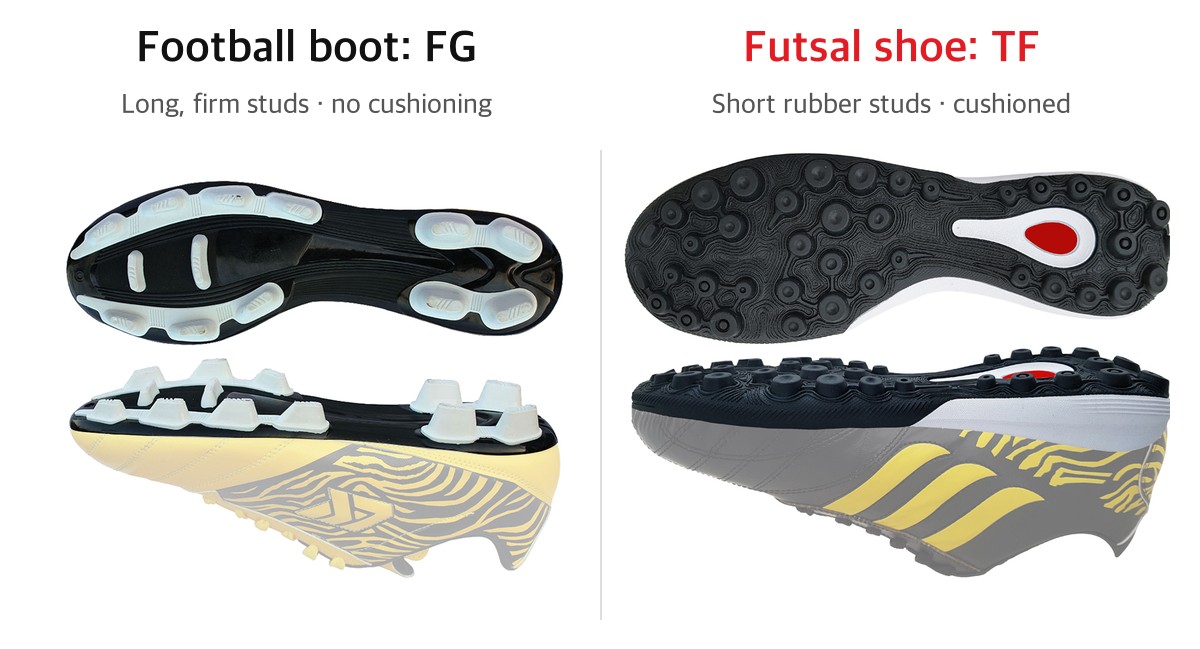
- Sole: football boots have long, firm studs. Futsal shoes have short rubber studs packed close together, or a flat sole for indoor courts.
- Cushioning: many futsal shoes have a cushioned layer in the sole. Most football boots attach the studded plate almost directly under your foot.
- Where to wear them: football boots are for natural grass, full-size artificial pitches and dirt. Futsal shoes are for futsal courts and short artificial turf.
- How to tell: the letters at the end of the product name tell you the sole type: FG, AG, MG, SG, TF or IC.
Difference one: the studs
Long studs are made to sink into natural grass so you can accelerate and turn without slipping. That is what FG (firm ground) boots do. AG (artificial grass) boots use shorter, more numerous studs that grip artificial pitches without catching. MG (multi-ground) sits between artificial grass and dirt, and SG (soft ground) uses metal studs for wet grass and soft mud.
A futsal court is a different surface. It is hard and flat, so long studs cannot sink in. They press into a few small points instead, which can make you slip and puts more load on your joints. Futsal soles, marked TF (turf), spread many short rubber studs across the whole sole so the grip comes from contact, not penetration. On polished indoor floors, IC (indoor court) shoes go one step further with a flat rubber sole.
If you are looking for shoes for artificial grass, check the pitch first. A futsal court or short turf calls for a TF sole. A full-size artificial pitch with longer grass calls for AG.
Difference two: the cushioning
The second difference is easy to miss because you cannot see it from the outside. Many futsal shoes have a cushioned midsole, similar to a running shoe. Football boots usually do not, because adding a soft layer on top of long studs would make the foot less stable.
Our futsal soles show the same split. One is plain natural rubber with low studs and no cushioning. The others bond natural rubber to a Phylon cushioning layer, which keeps them light. Players who spend long sessions on hard futsal courts usually choose a cushioned one.
Want to wear your football boots for futsal?
You do not have to buy a second pair to play futsal. If your boots still fit well and the upper is in good shape, we can remove the outsole and attach a futsal sole in its place. The upper stays the same, so the fit and touch you are used to stay too. The same process works in other directions: FG to AG for artificial grass, or MG to turf.
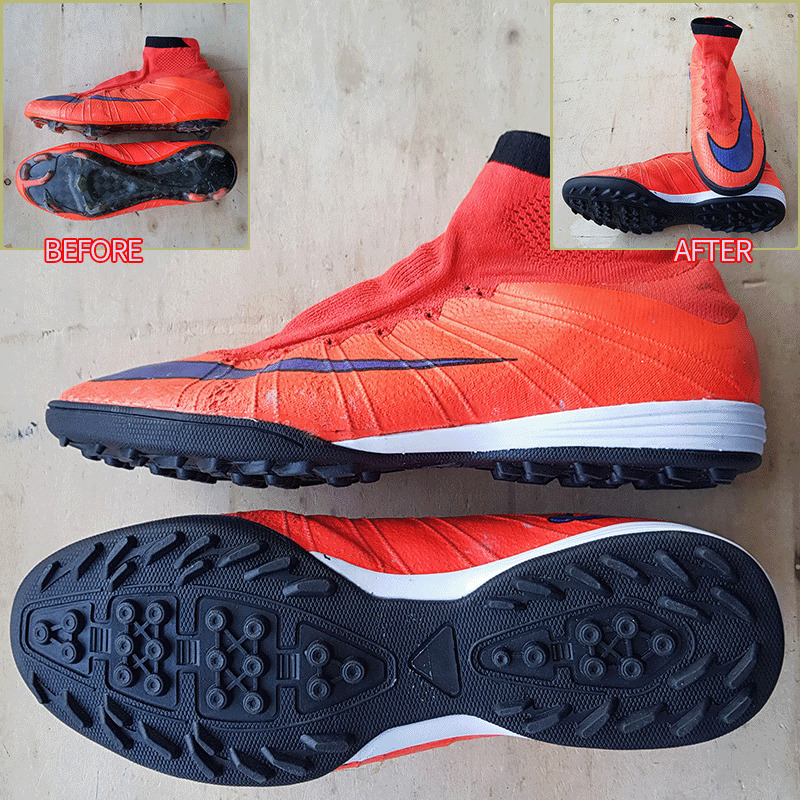
The photo at the top shows one of these conversions. A pair of Nike boots came in with a firm ground sole and went back with a cushioned turf sole (our No. 9). The small photo in the corner is the boot before the work. We have done the same with Mizuno leather boots, switching their firm ground soles to our black cushioned turf sole (No. 13-1).
A few things to know before you convert a pair:
- Stiffness can change. Some boots get their firmness from a stiff soleplate. When that plate comes off, the boot can feel softer, so we may recommend reinforcing the midsole. We will tell you when the boots arrive.
- The size does not change. Only the sole is replaced.
- The toe is protected. Futsal wears the toe quickly, so when we fit a futsal sole we stitch a reinforcing layer over the toe at no extra charge.
Our sole guide explains every sole type in more detail, and the full list of 19 numbered soles with photos is in our replacement sole catalog. If your futsal shoes are simply worn smooth, this guide covers resoling them.
Not sure which one you need?
Tell us where you play most: a futsal court, a full-size artificial pitch, or natural grass. Send a photo of your boots from the side and from below, and we will tell you which sole suits them and whether they are worth converting.
Getting a quote
Prices depend on your boots and the sole you choose. Send photos on WhatsApp and we will reply with a quote, usually within 2 to 4 hours. This guide shows which photos help most.
The work usually takes 2 to 3 weeks, up to a month in busy periods. Our workshop is in Goyang, next to Seoul. You can visit by appointment, open daily from 10:00 to 19:00, or send the boots by courier within Korea. We will send you the Korean address on WhatsApp. You can also reach us on KakaoTalk (ID 21apro).
Want a futsal sole on your football boots?
Send a side view and the sole. We will tell you which futsal sole fits them.
Ask on WhatsApp See 19 solesWatch the work
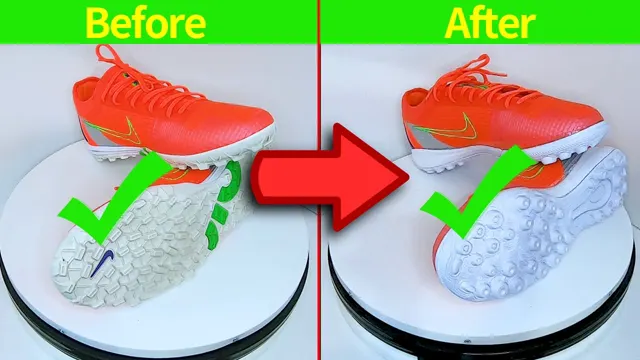
Replacing the outsole of Nike Mercurial Vapor XIV futsal shoes, resizing them and making a new tongue. About 18 minutes. Watch on YouTube