What Is a Midsole? Why Most Boot Resoles Replace It
When you send us photos of worn boots, the quote usually has two parts: a new sole, and a new midsole. Most people know what a sole is. The midsole is less obvious, because you cannot see it once the boot is finished. Here is what it is, why we replace it in almost every resole, and the two cases where it matters even more: a size change, and boots that relied on a stiff soleplate.
Three layers under your foot
Under your foot, a football boot has three parts worth knowing by name:
- The outsole: the bottom you can see, with the studs or the flat rubber. It is the part that touches the ground, and the part we replace in a resole.
- The midsole: the layer between the outsole and the insole. You never see it on a finished boot.
- The insole: the footbed inside the boot that your foot stands on.
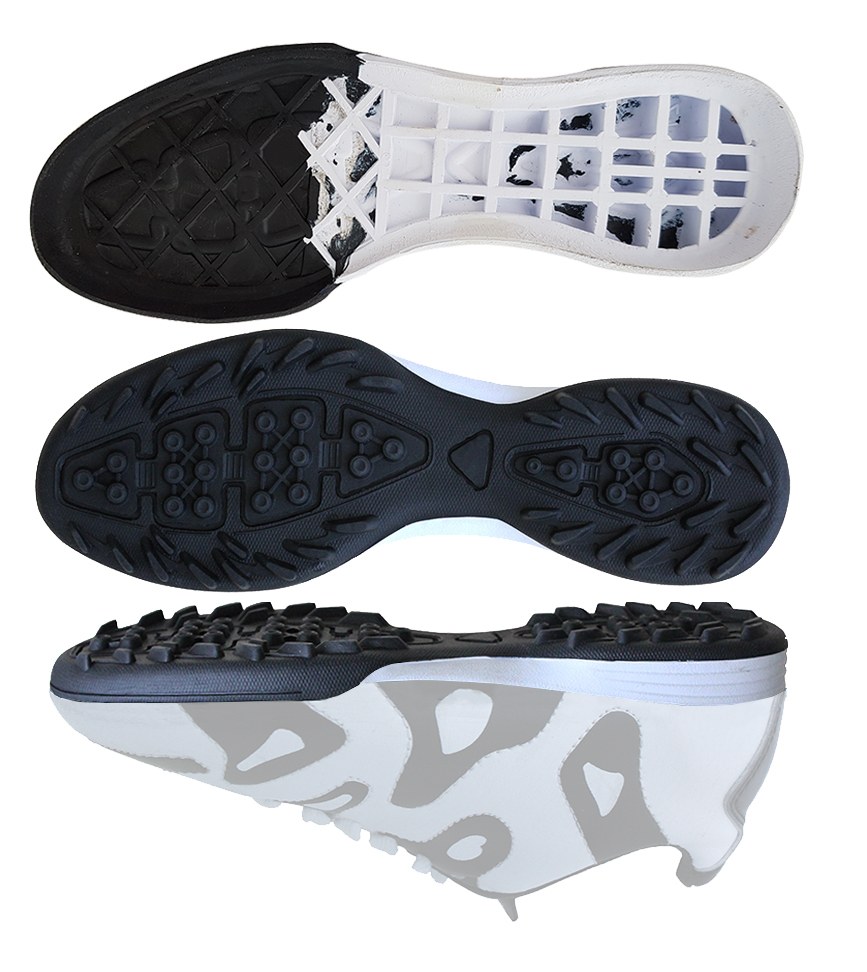
The word can be confusing if you have read about running shoes. Running shoe guides, including Nike's own guide to the parts of a shoe, use "midsole" for the foam layer that gives a running shoe its cushioning. Football boots usually have no thick foam layer like that. In most of the football and futsal shoes we take apart, the layer under the insole is a thin layer of fabric material, and most of the cushioning and stiffness comes from the outsole itself.
So when we say midsole, we simply mean the layer between the outsole and the insole, whatever it is made of. In Korean workshops you may hear it called jungchang.
Why we replace it in almost every resole
A resole starts by taking the old outsole off. Once it is gone, only that thin fabric layer is left under the upper. On its own, it does not bond well to a new sole, and it does not have the stiffness a football boot needs. Replacing it along with the sole is what keeps the boot working the way it should.
So in almost every resole we fit a new midsole first, then the new sole on top of it. We use two kinds:
- For football boots: a midsole with the stiffness the boot needs on natural grass (FG) and artificial grass (AG).
- For futsal and turf shoes: a midsole with a cushioning core, made for indoor play.
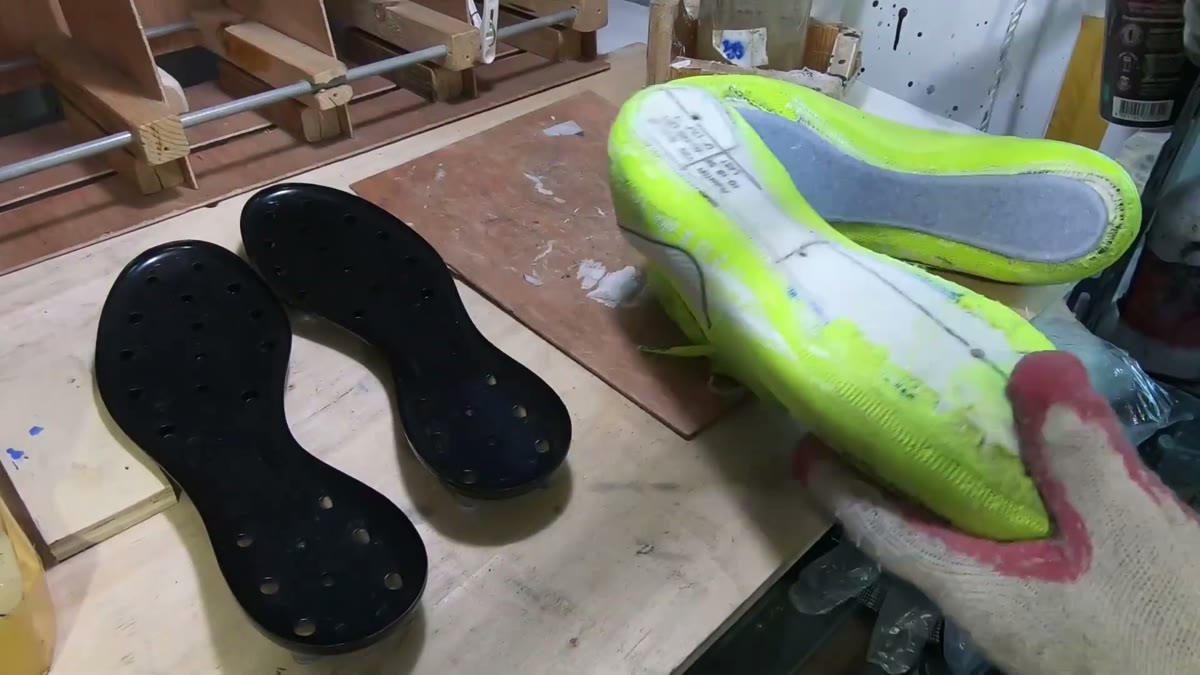
The new midsole is cut to the shape of each boot, so the new sole has a surface it can bond to properly. In the photo at the top of this page, from a Nike Phantom Vision AG we resoled, the boot at the back already has its new midsole, the grey layer across the bottom. The one in hand does not have it yet, and the two new soles are waiting on the left.
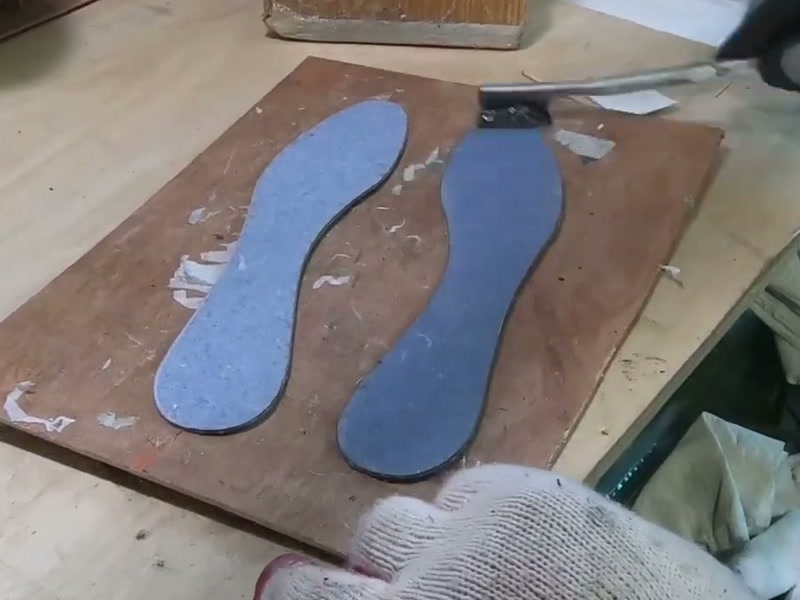
We say almost every resole rather than every one, because we decide after seeing the boots. When a new midsole is part of your quote, this is the reason.
When the size changes, the midsole has to change
A resole takes the bottom of the boot apart, so it is also the one time we can adjust the size a little. We can make a pair slightly longer or shorter, usually by about 5mm, and we confirm the amount after we have seen the boots. A size change is only possible together with a resole, not on its own.
When the size changes, the new midsole is not optional. The old one was made for the old size, so it no longer fits the boot once the length changes. It has to be replaced with a new midsole of the right size and the right stiffness for a football or futsal shoe.
A simple adjustment like this is done in the same step as the new midsole. If your left and right feet are different sizes, or you want a bigger change in length or width, tell us when you ask for a quote. Our guide to football boots for different size feet explains how we handle that case.
Boots that relied on a stiff soleplate
Some boots get much of their firmness from the original soleplate. When that plate comes off, the boot can feel softer than before, even with a new sole on it. For boots like these we may recommend reinforcing the midsole as well, so the boot keeps more of its firm feel.
It can come up when a boot changes sole type, for example a firm ground (FG) boot going to an AG or turf sole for artificial grass. Our guide to FG boots on artificial turf covers that conversion. We cannot always tell from photos alone whether a boot will need reinforcing, so we check the boots when they arrive and tell you then.
A new midsole also has limits. It sits under your foot, so it does nothing for the upper: a torn upper or a cracked finish needs its own repair. And it is not an orthotic: it is there so the new sole bonds well and the boot keeps its stiffness, not to change how you stand or move.
Getting a quote
Prices depend on your boots and the work they need. Send a photo of the side and a photo of the sole on WhatsApp, tell us where you play and whether you want a size change, and we will reply with a quote that shows whether a new midsole is included, usually within 2 to 4 hours.
The work usually takes 2 to 3 weeks, up to a month in busy periods. Our workshop is in Goyang, next to Seoul. You can visit by appointment, open daily from 10:00 to 19:00, or send the boots by courier, and we will send you the Korean address on WhatsApp.
You can also reach us on WhatsApp at +82 10 3547 7744, on KakaoTalk (ID 21apro) or by email at 21apro@naver.com.
Not sure what your boots need?
Send a side view and the sole on WhatsApp. We will tell you whether they need a new midsole, and whether the size can be adjusted at the same time.
Ask on WhatsApp See our 19 solesWatch the work
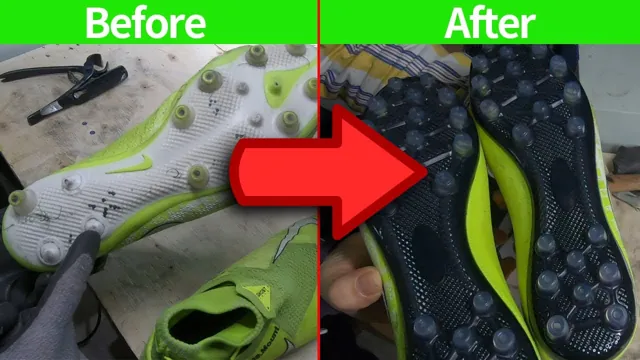
We take the worn sole off a Nike Phantom Vision AG and fit a new one. About 11 minutes. Watch on YouTube