How to Clean Football Boots: Washing, Drying and Storage

How long football boots last depends mostly on what you do after the game. Knock the mud off, wipe the upper by hand with mild detergent, open the boots up, stuff them with newspaper and let them dry slowly with no heat. Here is the full routine, how it changes with the upper material, what to avoid, and when a boot needs repair rather than replacing.
After every game: four steps
- Knock off the mud while it is still soft. Clean between the studs and along the stitching with an old toothbrush.
- Wipe the upper with a damp cloth and a little mild detergent mixed with warm water. Do not soak the boots.
- Open them up. Take the laces out and pull the tongue forward so air reaches the inside. Wash the laces separately.
- Stuff them with newspaper. It draws out moisture and holds the shape. Change it when it gets damp.
Care by upper material
Not sure what your upper is made of? Check the label inside the tongue or the product description.
| Upper material | Cleaning | Drying |
|---|---|---|
| Synthetic leather | Wipe with a damp cloth and a little mild detergent. It is fairly tough, so you can scrub a bit harder. | Stuff lightly with newspaper so it keeps its shape. |
| Knit (Flyknit and similar) | Use a soft brush, not a stiff one, and never soak the upper. Wipe with a damp cloth and mild detergent. | Stuff lightly with newspaper and dry in the shade. |
| Natural leather (kangaroo, calf) | Wipe with a well wrung-out damp cloth. | Dry slowly in the shade. Once fully dry, rub in a thin layer of leather conditioner. |
Five things that shorten a boot's life
- Washing machine or soaking. Water weakens the glue that holds the sole to the upper and can warp the upper.
- Tumble dryer, hair dryer or heater. Heat stiffens the upper and weakens the glue.
- Drying in direct sun. The material dries out and hardens. Dry in a ventilated, shaded spot.
- Leaving them wet in your bag. Moisture stays in until the next game, which causes odor and breaks the materials down.
- Strong detergent or bleach. It can damage the materials and the glue. Use only mild detergent.
The laces are the one part that can go in the washing machine: put them in a mesh bag and let them air-dry afterwards.
Odor
The smell comes from sweat and moisture trapped inside, where bacteria multiply. Drying the boots straight after the game does more than any spray. If they still smell, Nike's guide suggests spraying the inside with equal parts white vinegar and water after cleaning, then letting them air-dry.
Storing them until the next game
- Only when fully dry. Put them in a boot bag after they have dried, not before.
- Away from heat. A spot next to a heater or in the sun hardens the materials.
Habits that make boots last
- Wear the right sole for the pitch. Firm ground studs worn every week on artificial turf wear down faster and stress the sole. See FG boots on artificial turf.
- Check the studs and the toe now and then. Studs worn on one side or a toe getting thin are early signs of repair.
When to repair instead of replacing
If the upper is still in good shape, these problems can be fixed.
| What you see | Repair |
|---|---|
| Studs worn down or broken | Resoling |
| Toe of the upper worn thin | Toe reinforcement |
| Gap between the sole and the upper | Re-gluing the sole |
| Torn heel lining | Lining repair |
A small gap between the sole and the upper tends to open wider if you keep playing in it, so it is easier to fix early. A worn sole does not mean the end of a boot either: in our published work, 34.0% of the 3,191 resoling jobs where the original sole was recorded simply replaced a worn sole with a new one of the same type. The full numbers are in our resoling statistics.
Also in Korean: 축구화 관리법
Watch the work
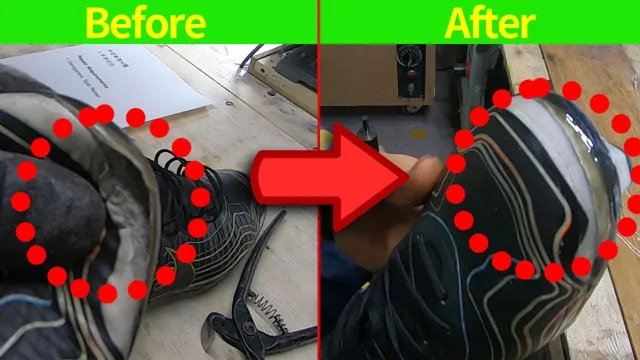
Re-gluing the separated front of a Nike Mercurial FG sole and reinforcing it with a clear layer. About 6 minutes. Watch on YouTube